The First Mile Manifesto
Most people think solving fieldwork means putting an app on a phone. They add an “offline mode” and believe the problem is solved.
It isn’t.
What they miss is the chasm between technology and the people who actually use it — millions of dollars lost in disconnected operations, hours wasted in transcription, and mountains of paper representing data that never made it to a decision.
The chasm has a name. It has three parts. And it is costing industrial operations more than they realize.
The Three Failures of the Industrial First Mile
I. The First Mile Problem
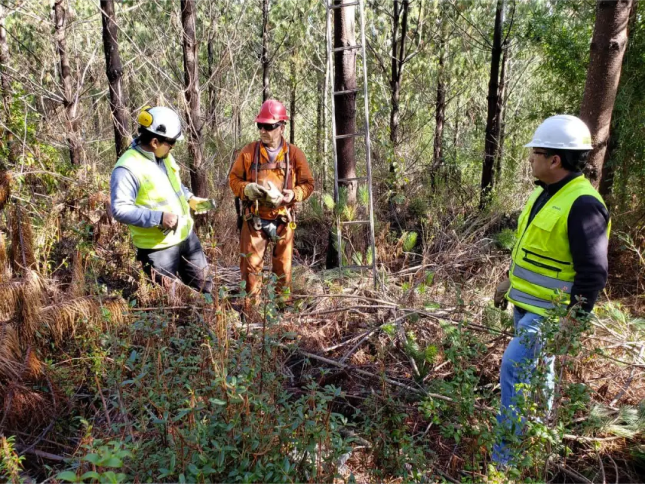
The First Mile is not a metaphor. It is a physical location: the last stretch of a mine road, the pre-dawn forest where a harvesting crew starts their shift, the dock where a port crew hands off at 3am. It is where value is made.
The First Mile Problem is the systematic failure that occurs when the critical zone where industrial value is created — the mine pit, the forest tract, the offshore platform, the port yard — is also the zone least connected to the digital systems that are supposed to manage it. Field workers operate in conditions where paper is still the most reliable tool, data is captured by hand, and the information that boards and operations managers depend on arrives hours late, partially transcribed, and stripped of the context that would make it actionable.
The consequences — lost data, compliance exposure, decisions made on stale information — are not accidents. They are the predictable output of a structural gap that most industrial organizations have never put a name to.
Read: The First Mile Problem →
II. The Shadow Tax
The Shadow Tax is the hidden monthly cost — running into the thousands — that industrial operations pay in lost data, rework, and compliance failures when field teams rely on paper-based systems instead of real-time digital capture.
Unlike a tax that shows up on an invoice, the Shadow Tax never appears on any line item. It accumulates quietly, shift by shift, clipboard by clipboard, in the gap between what happened in the field and what management can see.
The Shadow Tax is not caused by lazy workers or poor management. It is a structural consequence of building operations around tools that were never designed for industrial field conditions. Four mechanisms drive it: transcription time, rework and errors, compliance fines, and data mortality.
At Ultraport’s Antofagasta operations, paperwork consumed 80 minutes of every shift. At a forestry operation in Chile, 4,076 personnel hours per year were consumed by data entry that produced no new value. At Badinotti Marine, daily report transcription consumed 100% of available administrative time.
If your operations run on paper forms, spreadsheets emailed at midnight, or WhatsApp voice memos used as audit logs — you are paying the Shadow Tax right now. You just haven’t seen the bill.
III. Dashboard Delusion
Dashboard Delusion is the false sense of operational control executives experience when their BI tools show green metrics while field-level data is still being captured on clipboards, transcribed hours later, and delivered with a 24–72 hour lag.
The dashboard isn’t broken. The data feeding it is.
It looks like this: the operations review goes smoothly, harvest efficiency is at 94%, safety compliance is at 99.2%, and the board is satisfied. Meanwhile, in the Patagonian forest, three critical equipment faults went unlogged on Monday’s shift. A near-miss safety incident is sitting on a field supervisor’s clipboard, waiting to be transcribed. And the 94% efficiency figure is based on Tuesday’s data — it’s now Friday.
Dashboard Delusion is one of the most dangerous conditions in industrial operations — not because of what it reveals, but because of what it conceals.
Together, They Are the Data Friction Tax
The First Mile Problem creates the gap. The Shadow Tax fills it with hidden cost. Dashboard Delusion hides it from the people who could fix it.
This is the Data Friction Tax — the full compound cost of industrial operations running blind. It is structural, not accidental. It compounds every shift, every week, every quarter. And it is entirely solvable.
Our Mission
To bravely and relentlessly eliminate the Shadow Tax — giving every field worker and every operations manager the technology that finally brings the First Mile into the digital age.
eSkuad was built to close the chasm. We’ve built the only technology capable of fully digitizing and automating field operations across the entire supply chain — not just capturing data, but ensuring it flows from the First Mile to every system that needs it.
This isn’t theory. It’s proven. eSkuad works everywhere — in Atacama mines, Patagonian forests, and offshore platforms where every other platform fails. That field-born foundation is what allowed us to land and expand with Fortune 500 companies in markets where generic platforms couldn’t follow.
Our Values
The principles that shape how we build, how we work, and why we exist.
Bravery
To transform the current state and generate truly innovative solutions, it takes the courage to challenge a broken industry and its incumbents. The industrial field operations market has been underserved for decades — not because the problem was unsolvable, but because no one was willing to go where the problem actually lives.
Operational Ownership
In a market with a fundamental failure of imagination, our success depends on building purpose-built tools that give field workers control over their own operational systems. When field workers own their data — when the information they generate is theirs to capture, verify, and submit — operations stop bleeding value in the First Mile.
Grit
We are a company that doesn’t just innovate; we execute. Our vision requires a systematic, execution-first drive to solve the problem — and the determination to see it through. eSkuad was stress-tested in Atacama dust and Patagonian rain long before it was pitched in a boardroom. That sequence matters.
Simplicity
We believe that the most powerful solutions are the simplest ones. We take the impossible complexity of fieldwork and make it effortless, because the most profound technologies are those that just work. A field worker in gloves, at midnight, with no signal, cannot afford software that needs a training session.
The Goal: Operational Sovereignty
Operational Sovereignty is the state achieved when field data flows automatically from capture to insight
— with no Shadow Tax, no Dashboard Delusion, and no First Mile gap.
It means field workers capture what happens, when it happens, where it happens — even without signal. It means operations managers see what is actually happening, not what happened 48 hours ago. It means compliance records exist at the point of work, not two days later on someone’s desk.
It means the First Mile is no longer where data goes to die. It’s where it begins.
How eSkuad Eliminates the Data Friction Tax
eSkuad is the First Mile field operations platform built specifically to close the chasm — not adapted from a generic forms tool or an enterprise project management system, but built from 15+ years of real industrial operations across mining, forestry, and ports.
Field teams capture data at the point of work — inspections, maintenance records, safety reports, daily progress — on mobile, even without connectivity. MagikSync™ syncs that data automatically to operations dashboards the moment signal appears, without draining battery or requiring manual steps. Operations managers see what’s actually happening — not a 24-hour-old reconstruction.
The Shadow Tax disappears. The Dashboard shows the truth. The First Mile is finally connected.
See how The Eskuad Engine works →
How Much Is the Shadow Tax Costing Your Operations?
Most operations teams have never calculated it. Start here.
✓ 90-Day Value Confirmation Guarantee — see measurable ROI in your field operations or we make it right.
Proof: Operational Sovereignty in the Field
- Badinotti Marine: 100% time-savings in daily report transcription. Significant decrease in compliance fines.
- Ultraport Antofagasta: 80 minutes → 40 minutes of paperwork per shift. 60 hours/month saved.
- Pandolfi Price: 67% savings in filing and reports. 73% decline in machinery failure detention time.
- Forestry operation, Chile: 25% reduction in annual operation costs. 4,076 personnel hours saved.
- Lopmann: 50% reduction in data entry and report generation time. 22.5 hours/month saved.