
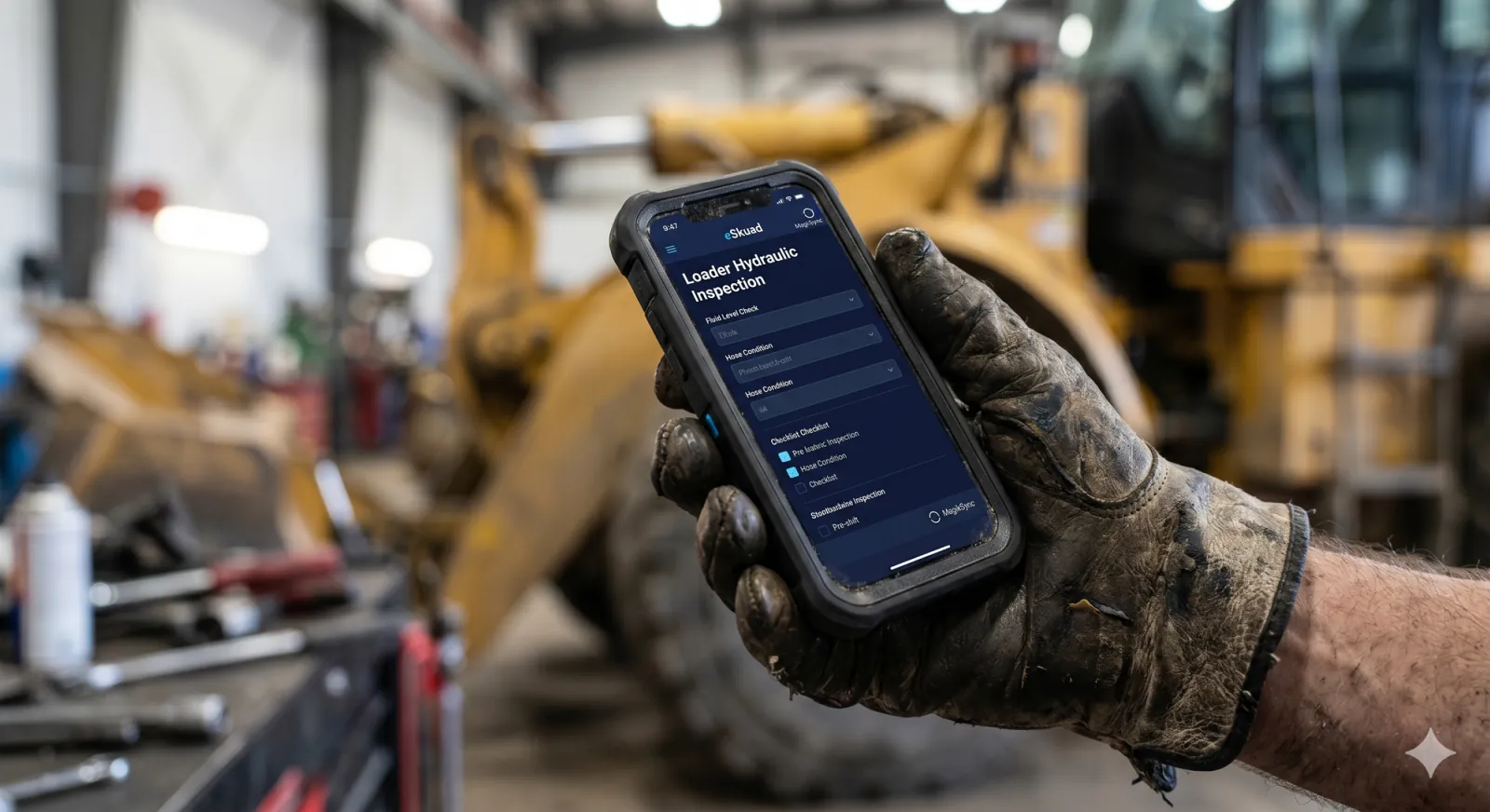
A defensible software decision is one that every member of an industrial buying group can explain and stand behind, even if the rollout hits problems. In the First Mile, where a missing inspection can become a safety or compliance event, that matters as much as the feature list.
The field supervisor may love your app in the yard. Then the proposal travels to a conference room, far from the dust and the diesel, and a different question gets asked: if we choose this and it goes wrong, who answers for it?
Buyers are not only buying a product
New research from the LinkedIn B2B Institute, WARC, and Lions Advisory puts numbers on that instinct. In a survey of 750 B2B buyers with Bain & Company and NewtonX, the top driver of feeling “extremely confident” in a vendor choice was this statement: “I could defend the decision if it went wrong” (34%). It narrowly beat confidence that the product would do the job (32%).
Three of the other top factors were also about people: managing bumps in the vendor relationship (29%), an aligned buying group (28%), and an easy decision (21%).
The authors call their findings directional, and the campaign data is correlational. But it matches what we see in the field. Product capability gets you onto the shortlist. Defensibility gets the contract signed.
What we keep hearing in industrial buying meetings
Over the past few months, I have sat in evaluation meetings with port, forestry, energy, and construction teams across Latin America. The names and details stay private, but the patterns repeat.
The champion has to sell it internally. At one terminal, the person who found the problem still had to take it to a management committee, with Operations, HSE, and Technology behind it. The demo was not the finish line. It was the raw material for their internal case.
Innovation teams need numbers they can defend. One innovation lead put the issue plainly: without a measured impact, they could not justify the project afterward. So we now agree on the baseline in the first two weeks, before anyone starts arguing about results.
IT asks what happens on the worst day. In a multi-site review, the first serious question was what happens if the system fails. The useful answer was architectural: the record stays on the phone first, so a dropped signal or server incident does not erase what the operator captured.
Legal needs paper, not reassurance. In one contract review, the legal team asked for documentation to bring to their general counsel. That was entirely fair. Their job was not to trust us. Their job was to show why the company was protected.
None of these people were being difficult. They were doing their jobs.
The five questions every field software decision must survive
| Stakeholder | The real question | Evidence that answers it |
|---|---|---|
| Operations | Will crews actually use it? | Works on their phones, offline, using the process they already know |
| HSE and Quality | Can we prove it happened? | Records with GPS, time, photos, and signatures |
| IT and Security | Is it safe for our systems? | SOC 2 Type 2 report, clear architecture, integration through APIs or an intermediate database |
| Finance | How do we justify the spend? | A baseline, agreed targets, and measured results |
| Legal and Procurement | What if it goes wrong? | SLA, liability terms, data retrieval, and written exit conditions |
If your evaluation cannot answer one of these, that is where the deal will stall. Often silently.
How to make your next decision defensible
- Name the buying group early. Bring IT, HSE, and Finance in before the final proposal, not after.
- Measure the current process. Time per report, downtime, rework, and audit findings are enough to start.
- Digitize today’s process first. Standardize later. Forcing a new process and a new tool at once adds avoidable risk.
- Ask for the evidence, not the promise. Request the security report, the SLA, and the integration approach.
- Set a decision date and an exit. An open-ended pilot protects nobody.
Where eSkuad fits
eSkuad is the First Mile platform built for this kind of scrutiny. MagikSync™ saves each record on the device first, then syncs by priority: lightweight data first, heavy files queued, without draining the battery. Integrations connect through APIs or an intermediate database and do not modify your SAP core.
For teams that want a formal decision point, our optional 90-day Value Confirmation Program sets the baseline and success criteria together. If you decide not to move forward, you exit and receive a refund under the VCP Addendum to our Subscription Agreement.
Our job is not only to work when the signal drops. It is to give your team a decision that holds up when someone asks why you made it.
Max Echeverria is the founder and CEO of eSkuad and works on First Mile Science, the study of how industrial data is captured where work actually happens.
Frequently Asked Questions
What is a defensible software decision?
A defensible software decision is one that every member of the buying group can explain and stand behind, even if the rollout hits problems. It rests on evidence, clear exit terms, and a measured baseline rather than on a vendor’s promises.
Who is usually involved in buying field operations software?
Most industrial purchases involve Operations, HSE or Quality, IT and Security, Finance, and Legal or Procurement. Each group evaluates a different risk, so one generic pitch rarely answers all of them.
How do you build a business case for field software?
Measure the current process first: time per report, downtime, rework, and audit findings. Agree on success criteria before rollout, then compare results against that baseline at a fixed decision date.
What should a field software pilot include?
A useful pilot has a defined scope, a documented baseline, agreed success criteria, a decision date, and written terms for what happens if the company decides not to continue.